Pages

Friday, October 29, 2021

Personalized Passion Project: Beast King Kabuki 2

As you might have known, around mid Term 3, we have been working on our personalized passion project. In the first blog post, I talked about the planning of our project, our driving question, and the start of our project. A couple of weeks later, we have finally finished our sculpture "The Beast King". This idea came from a Kabuki play, a form of theatre, a Japanese play. Anyway, we created a slideshow to present the process of how we created our sculpture. Overall, I believe that all members of the group worked well together to finish the sculpture on time. 


Tuesday, October 26, 2021

Te Tiriti o Waitangi - Tangaroa Poster: Social Studies

For the last term on Social Studies, we are learning about "Te Tiriti o Waitangi", or The Treaty of Waitangi. The Treaty of Waitangi has been taught to us several times, however, we don't fully understand its story. The Treaty of Waitangi was first signed on the 6th of February 1840 by representatives of the British Crown and Maori chiefs from the North Island of New Zealand. 

For our task, we were given different Maori God's to find what deity they had and their equivalent in Roman, Greek and Hindi. Finally, making a poster for one of the Gods and a bit of story about them. I chose to make a poster about Tangaroa, who is the God of the ocean. Here is the poster that I have made. 


Wednesday, October 20, 2021

Fashion from the 1850-1920 in New Zealand - English

Pre-Reading Task:

Today in English we are researching one of the topics that were given to us. We were given three topics to choose from; fashion from 1850-1920 in New Zealand, the difference in how Pākehā settlers and native Māori lived during 1850-1920, and the myths and stereotypes Europeans had regarding the Māori during 1850-1920. I chose to research the fashion from 1850-1920 in New Zealand as I found it the most interesting. Anyway, here are my findings. 

Women: Women from the 19th-century wore long dresses, corsets and hats. Many of their fashion was based on styles from London and Paris. In the late 19th-century feminists expanded practical clothes such as knickerbockers (baggy knee-length trousers) for women. Overall, women's fashion was somewhat lacy and feminine, which then became simpler and looser in 1920.

Men: Men's fashion was limited with strong fabrics with colours including black, blue, brown, white and grey. 19th-century men wore shirts, waistcoats, trousers and coats. In general, men's fashion has changed less over time than women's fashion. 

Bustles, bodices and broad-brimmed hats | National Library of New Zealand


Post-Reading Tasks:

The narrative "How Pearl Button was Kidnapped" contained three main characters; Pearl and the two Maori women. Pearl is a little child with blonde hair wearing a pinafore, a dress, a petticoat, and stockings. She was light-skinned with very white teeth. As she stood by the gate, we are then introduced to the two Maori women. Pearl described them as fat and dark-skinned, one dressed in red and the other was dress in yellow and green. Furthermore, they had pink handkerchiefs on top of her head and wore no shoes and stockings. 

1. Pearl was swinging on a little gate at the front of the house of boxes.
2. Two Maori women came walking down the street and took Pearl.
3. They walked a long way and arrived at their house.
4. They then ate and laughed and took her to the beach.
5. Police officers came to look for Pearl and take her back. 

Monday, September 20, 2021

Personalised Passion Project: Beast King Kabuki

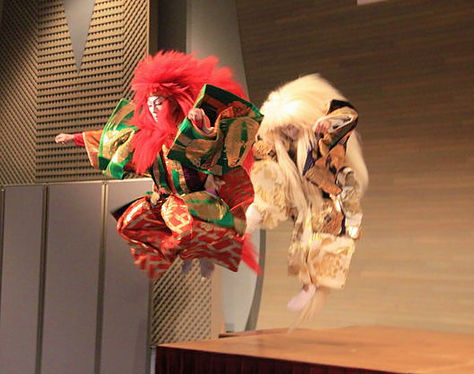
For the past few weeks on Wananga, we have been working on our personalised passion projects. We have assembled a group of seven people, five from our Wananga and two from another Wananga next to our classroom. On the first day, we brainstormed our ideas and concluded into creating a life-sized sculpture which is the "King of the Beast" from a Kabuki play. Kabuki is a form of theatre, Japanese theatre. We also developed our driving question; How can we use sustainable materials (recycle), such as newspaper and cardboard to create art--life-size sculpture? 


On the following day, we began to construct a plan and the measurements of the sculpture whilst thinking about the materials we require to make the sculpture. Proceeding to Wednesday, we began to measure the cardboard around the torso including, arms and hands. We then began to cut out the pieces that we measured around the torso, arms and hands. On Friday, we measured and cut the body, head and put together some of the pieces cut. Overall, the materials we used include cardboard, newspapers and any other junk. 


Ashley's Random Blog: Kabuki Performs at JapanFest 2016 #JapanFest  #Gwinnett #family #WINTICKETS

Wednesday, September 15, 2021

Yellow Brick Road: Post-reading Questions - English

1. The narrator's reason for moving to Wellington is money. It has been mentioned that they were poor and that they couldn't stay poor all the time. We can also comprehend their financial struggles as the limited space in the car and its problems. Moving to Wellington could ultimately change their lives, and fix their financial problems. 

2. The several differences between Wellington and Waituhi are the people. Throughout their drive to Wellington, people would be disrespectful towards them and sped past them without stopping. They also mentioned how there were fewer Pakeha in Waituhi and plenty in Wellington. 

3. Dad told Uncle Sam they were moving to Wellington because Dad had enough of shearing, the fruit-picking and the going down South to shear some more. Moving to Wellington could give them better jobs that pay more than the jobs they do at Waituhi. Overall, Dad wanted a new start for his kids so that they would grow up with everything.

4. The narrator's attitude changed once they got closer to the Emerald City (Wellington), he was excited and happy. Although, once he saw the numerous yellow signs that instructed them about the road. He began to feel scared and sang to himself to feel consoled. 

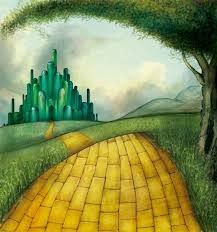
5. The Emerald City, Yellow Brick Road, Flying Monkeys, scarecrow, tinman and cowardly lion, are all allusions (references) to "The Wizard of Oz". I believe that Witi Ihimaera used references from The Wizard of Oz as the characters from The Wizard of Oz believed that by going to Emerald City, they will be helped. Similar to the characters from Witi Ihimaera, where the family is poor, resulting in the journey to go to the Emerald City (Wellington). They might not know what awaits at Emerald City, however, it could still fix their problems. 

Uncategorized – Home

Wizard Of Oz Reimagining Emerald City Is Actually Happening Now -  CINEMABLEND


Wednesday, September 8, 2021

Yellow Brick Road: Pre-reading Questions - English

1. Witi Ihimaera was born on February 7, 1977, in Waituhi, near Gisborne, New Zealand. Ihimaera is an author, novelist and short-story writer, anthologist and librettist. He is known for being the first Maori to publish both a book of short stories and novels about Maori rather than a European. Many of his work has been adapted to films, including Mahana, Déwé Gorodé: Écrire Le Pays, White Lies, Kawa' and Whale Rider.

Witi Ihimaera - Penguin Books New Zealand

2. The title "Yellow Brick Road", for me symbolises hard work and wealth. Yellow bricks could be determined as gold which can relate to hard work and wealth. 

3. Based on the title, "Yellow Brick Road" could be about a journey about people where they face several challenged on the way to reach their goal. 

Some of his works:

Mahana (film) - Wikipedia

The Whale Rider (Kenyan schools edition) : Witi Ihimaera : 9780435135089

White Lies by Witi Ihimaera

Kawa (film) - Wikipedia

Monday, August 23, 2021

The Einsatzgruppen - Social Studies

During the study of the Holocaust, we have revisited mapping activities that required us to locate the given counties on a map and identify them. The topic for this mapping activity was "The Einsatzgruppen," which translates to "clean-up squads". We were tasked to locate countries that were involved with WW2 and death camp locations. To complete this task, I used my maps to show my work, as I found working digitally easier and faster. 

Link to My Maps: Link

The History Place - Holocaust Timeline: Map of Nazi Concentration Camps