Pages

Monday, September 20, 2021

Personalised Passion Project: Beast King Kabuki

For the past few weeks on Wananga, we have been working on our personalised passion projects. We have assembled a group of seven people, five from our Wananga and two from another Wananga next to our classroom. On the first day, we brainstormed our ideas and concluded into creating a life-sized sculpture which is the "King of the Beast" from a Kabuki play. Kabuki is a form of theatre, Japanese theatre. We also developed our driving question; How can we use sustainable materials (recycle), such as newspaper and cardboard to create art--life-size sculpture? 


On the following day, we began to construct a plan and the measurements of the sculpture whilst thinking about the materials we require to make the sculpture. Proceeding to Wednesday, we began to measure the cardboard around the torso including, arms and hands. We then began to cut out the pieces that we measured around the torso, arms and hands. On Friday, we measured and cut the body, head and put together some of the pieces cut. Overall, the materials we used include cardboard, newspapers and any other junk. 
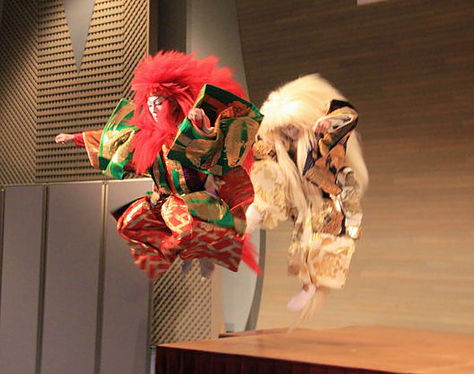

Ashley's Random Blog: Kabuki Performs at JapanFest 2016 #JapanFest  #Gwinnett #family #WINTICKETS

Wednesday, September 15, 2021

Yellow Brick Road: Post-reading Questions - English

1. The narrator's reason for moving to Wellington is money. It has been mentioned that they were poor and that they couldn't stay poor all the time. We can also comprehend their financial struggles as the limited space in the car and its problems. Moving to Wellington could ultimately change their lives, and fix their financial problems. 

2. The several differences between Wellington and Waituhi are the people. Throughout their drive to Wellington, people would be disrespectful towards them and sped past them without stopping. They also mentioned how there were fewer Pakeha in Waituhi and plenty in Wellington. 

3. Dad told Uncle Sam they were moving to Wellington because Dad had enough of shearing, the fruit-picking and the going down South to shear some more. Moving to Wellington could give them better jobs that pay more than the jobs they do at Waituhi. Overall, Dad wanted a new start for his kids so that they would grow up with everything.

4. The narrator's attitude changed once they got closer to the Emerald City (Wellington), he was excited and happy. Although, once he saw the numerous yellow signs that instructed them about the road. He began to feel scared and sang to himself to feel consoled. 

5. The Emerald City, Yellow Brick Road, Flying Monkeys, scarecrow, tinman and cowardly lion, are all allusions (references) to "The Wizard of Oz". I believe that Witi Ihimaera used references from The Wizard of Oz as the characters from The Wizard of Oz believed that by going to Emerald City, they will be helped. Similar to the characters from Witi Ihimaera, where the family is poor, resulting in the journey to go to the Emerald City (Wellington). They might not know what awaits at Emerald City, however, it could still fix their problems. 

Uncategorized – Home

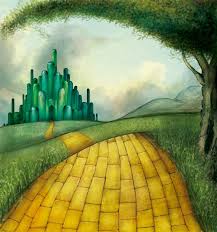
Wizard Of Oz Reimagining Emerald City Is Actually Happening Now -  CINEMABLEND


Wednesday, September 8, 2021

Yellow Brick Road: Pre-reading Questions - English

1. Witi Ihimaera was born on February 7, 1977, in Waituhi, near Gisborne, New Zealand. Ihimaera is an author, novelist and short-story writer, anthologist and librettist. He is known for being the first Maori to publish both a book of short stories and novels about Maori rather than a European. Many of his work has been adapted to films, including Mahana, Déwé Gorodé: Écrire Le Pays, White Lies, Kawa' and Whale Rider.

Witi Ihimaera - Penguin Books New Zealand

2. The title "Yellow Brick Road", for me symbolises hard work and wealth. Yellow bricks could be determined as gold which can relate to hard work and wealth. 

3. Based on the title, "Yellow Brick Road" could be about a journey about people where they face several challenged on the way to reach their goal. 

Some of his works:

Mahana (film) - Wikipedia

The Whale Rider (Kenyan schools edition) : Witi Ihimaera : 9780435135089

White Lies by Witi Ihimaera

Kawa (film) - Wikipedia

Monday, August 23, 2021

The Einsatzgruppen - Social Studies

During the study of the Holocaust, we have revisited mapping activities that required us to locate the given counties on a map and identify them. The topic for this mapping activity was "The Einsatzgruppen," which translates to "clean-up squads". We were tasked to locate countries that were involved with WW2 and death camp locations. To complete this task, I used my maps to show my work, as I found working digitally easier and faster. 

Link to My Maps: Link

The History Place - Holocaust Timeline: Map of Nazi Concentration Camps


The Planning of Kristallnacht - Social Studies

Following on the topic of Kristallnacht, today we have learned how Kristallnacht was planned after the night it actually happened. 

TO ALL REGIONAL AND SUB-REGIONAL GESTAPO OFFICES
sent at 1:20AM, November 8, 1938

SUBJECT: MEASURES AGAINST THE JEWS THIS NIGHT
That only such measures were to be taken that would not endanger German lives or property (e.g. the burning of synagogues was only to be carried out if there was no danger of fire spreading to the surrounding district). Businesses and residences of Jews may be damaged but not looted. Particularly care is to be paid in business sections and surrounding streets. Non-Jewish businesses are to be protected from damage under all circumstances. Police are to seize all archives from synagogues and offices of community organizations, this refers to the material of historical significance. Archives are to be handed over to the SS. As soon as possible, officials are to arrest as many Jews especially wealthy ones - in all districts as can be accommodated in existing cells. For the time being, only wealthy male Jews of not too advanced age are to be arrested. 

Signed by Reinhard Heydrich,
SS Gruppenfurer

How does this evidence in this document show that "Kristallnacht" was planned in advance of the event actually happening? 

Kristallnacht was planned in advance since the document hints at several pieces of evidence that prove this theory. The document mentioned what to do and what not to do during the night it occurs. We can see how Nazi Party targeted Jews as they damaged and destroyed the Jew's properties. They were even ordered to arrests as many Jews as possible, especially wealthy ones. Therefore, proving how Kristallnacht was planned before the night, it happened. 

Kristallnacht | Holocaust Encyclopedia

Wednesday, August 11, 2021

Kristallnacht - Social Studies

What is meant by the term "Kristallnacht"? 


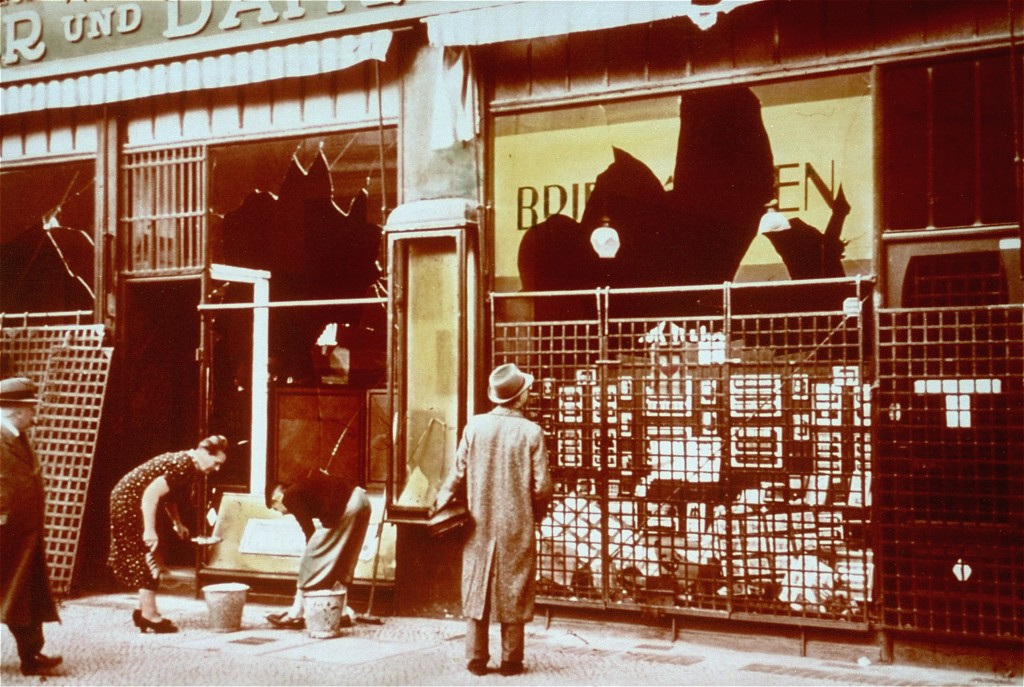
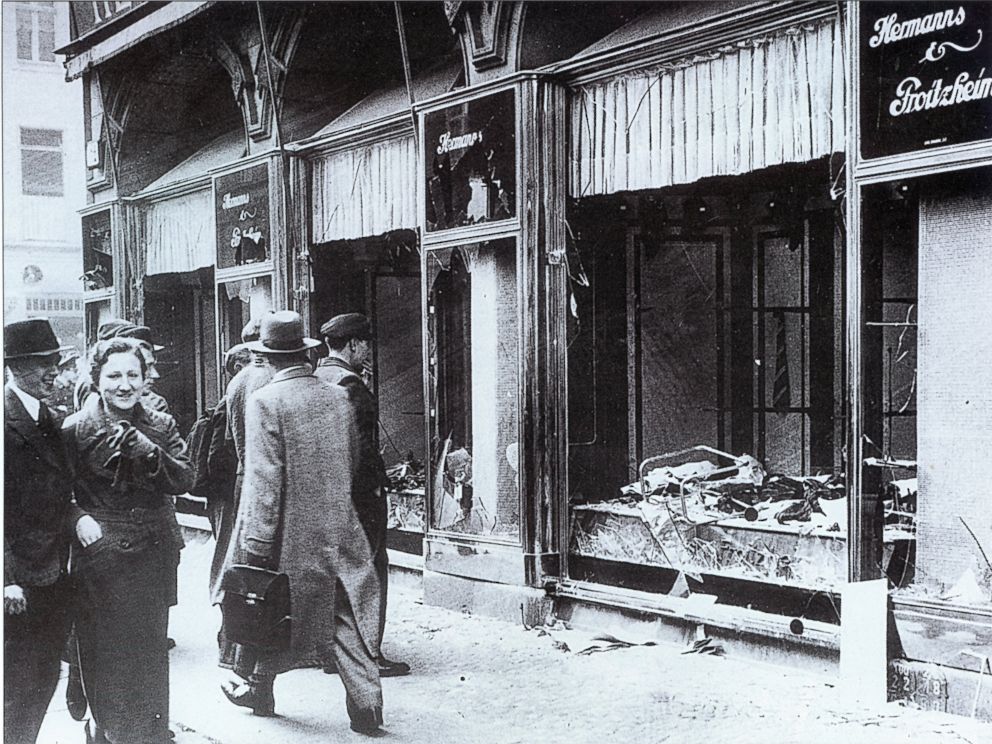
Kristallnacht (Crystal Night) is referred- to as the Night of the broken glass, associated with the attack of the German Nazis on Jewish persons and property as they broke the glass of the Jew's houses and left them in the streets as part of their pogroms (devastation). 


When did this event occur?


This event occurred on the 9th of November, 1938, and continued during November 10. Taking place in Germany, Austria and Czechoslovakia.


How many synagogues did the programme claim were burned?


In the aftermath of the pogroms, a total of 267 synagogues were destroyed or burned.


How many Jews were claimed to have died as a result of this event?


During this event, 91 Jews have been claimed to have died as a result of this event. Several dozens even committed suicide.


How many were said to have been sent to concentration camps?


Around 30,000 male Jews, have been arrested and sent to Nazi concentration camps. 


What was the reaction of the German people to this event?


Vast numbers of people involved themselves in looting and plundering, picking up goods thrown out onto the street whilst benefiting from the confiscation of Jewish property. Teachers brought their students to mock and ridicule the Jews, as many of the young people considered that the “Jews are our misfortune”. However, some felt ashamed to be German and were decisive of the violence upon the people and the destruction of property.


How the World Shrugged Off Kristallnacht - ABC News


Monday, August 9, 2021

The Nuremberg Laws - Social Studies

Today on Social Studies, we studied the Nuremberg Laws and how they affected the Jews. The Nuremberg Laws were antisemitic and racist laws formed in Nazi Germany on the 15th of September, 1935. Moving forward, we were then given a task; in which we were required to answer five different questions that relate to the topic. 

THE NUREMBERG LAWS

At their annual party rally held in Nuremberg in September 1935, the Nazi leaders announced new laws based on many of the racial theories common in Nazi beliefs. These German Jews from Reich citizenship and prohibited them from marrying or having sexual relations with persons of "German or German-related blood." Additional regulations to these laws deprived them of most political rights. Jews were disenfranchised (that is, they had no right to vote) and could not hold public office. 

The Nuremberg Laws did not identify a "Jew" as someone with particular religious beliefs. Instead, the first amendment to the Nuremberg Laws defined anyone who had three or four Jewish grandparents as a Jew, regardless of whether that individual recognized himself or herself as a Jew or belonged to the Jewish religious community. Many Germans who had not practised Judaism (the Jewish religion) or who had not done so for years found themselves caught in the grip of Nazi terror. Even people with Jewish grandparents who had converted to Christianity could be defined as Jews. 

The Nuremberg Laws of 1935 were the start of a new wave of anti-Semitic laws that brought about immediate segregation: Jewish patients were no longer admitted to municipal hospitals in Düsseldorf, German court judges could not refer to legal commentaries or opinions written by Jewish authors, Jewish officers were expelled from the army, and Jewish university students were not allowed to sit for doctoral exams. 

Other regulations reinforced the message that Jews were outsiders in Germany; for example, in December 1935, the Reich Propaganda Ministry issued a decree forbidding Jewish soldiers to be named among the dead in World War I memorials. 

Adapted from http://www.ushmm.org/wlc/en/article.php?ModuleId=10005681 


  1. Provide two examples of ways in which the Nuremberg laws affected the rights of German Jews.  Several examples can be seen in which the Nuremberg law affected the rights of German Jews. Such examples are the "Nuremberg Laws", which excluded German Jews from Reich citizenship and prohibited them from marrying or having sexual relations with persons of "German or German-related blood." Another example is Germans who had not practised Judaism (the Jewish religion) or who had not done so for years found themselves caught in the grip of Nazi terror. Even people with Jewish grandparents who had converted to Christianity could be defined as Jews. 


  1. What other actions were taken that discriminated against Jews in Germany? (Remembering) Other examples of actions that discriminated against Jews are how they are prohibited from voting and could not hold public office. Furthermore, Jewish officers were expelled from the army, and Jewish university students were prevented sit for doctoral exams. 


  1. Why do you think that the Nazis passed these laws? (Understanding) I believe that the Nazis passed these laws to show their dominance and put their ideas about race into law. The Nazis believed in the false assumption that the world is divided into distinct races that are not equally strong and valuable. However, they produced laws that would be unfair to Jews to portray their anti-semitism. 


  1. If a New Zealand government passed a law that provided for different treatment of a named racial group in New Zealand, what do you think the reaction of most New Zealand people would be? Why do you think this might be the case? (Applying) If a New Zealand government passed a law that provided different treatment of a named racial group in New Zealand, I believe that most New Zealanders would be astounded. We now live in a world where equal rights are held in great importance, and it is something we can't ignore. However, when disregarded, it can cause problems leading to demonstrations and predominantly havoc among New Zealand. 


  1. Do you think these Nuremberg laws were racist? Explain your point of view. (Evaluating) I believe that these Nuremberg laws are discriminatory. As the law disrupted human rights and mainly targeted Jews. Such laws they had to follow were unfair, biased and overall antisemitic.


The Nuremberg Race Laws | Holocaust Encyclopedia